
Retail Display Trends: Less POS, Smarter Materials and Displays Built to Last
Retail displays are evolving. From innovative cardboard shelf trays to wooden and metal fixtures designed to last, the way brands approach visual merchandising and point of sale (POS) is changing.
We’re seeing a greater focus on material choice, flexibility and making every display count. With tighter budgets and less POS in some stores, retailers are thinking more carefully about what they invest in and how long it will serve them.
So, what are the trends shaping retail displays, and what do they mean for brands and retailers?

Cardboard is doing more than ever
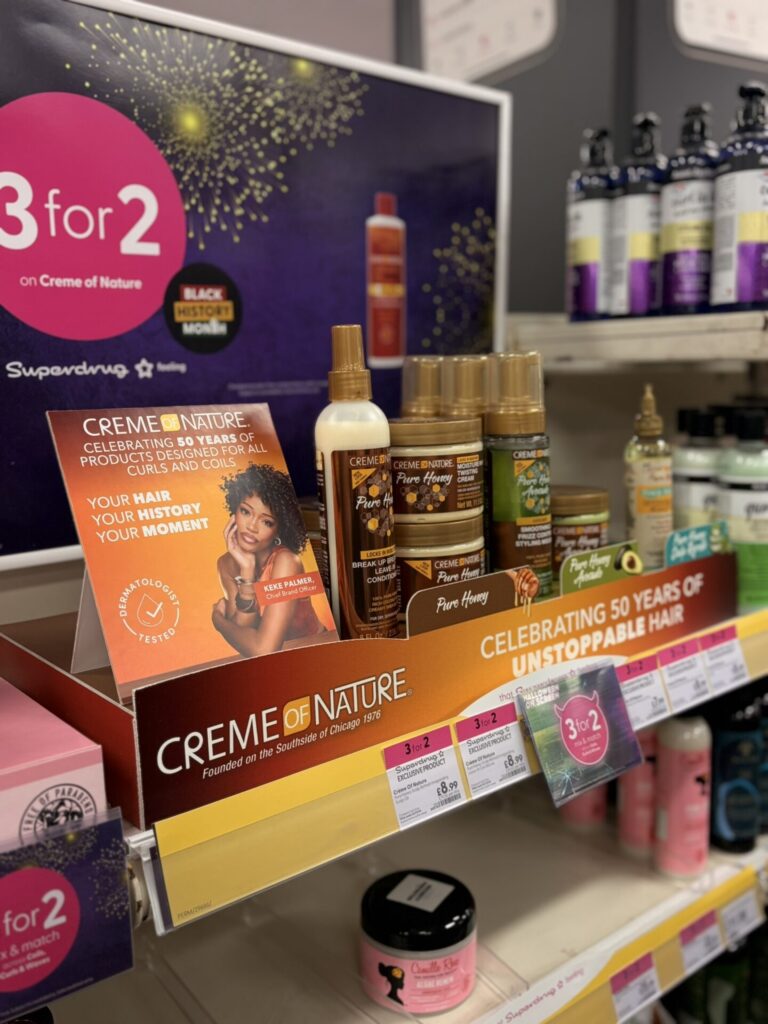
Cardboard has long been popular for temporary POS, but it’s increasingly being used in clever ways. Specially designed shelf trays, for example, are replacing formats traditionally made from plastic.
These go beyond basic packaging. Thoughtful structural design can create practical, branded solutions that organise products neatly while making effective use of shelf space.
This reflects a wider shift towards reconsidering traditional materials and finding alternatives that suit the application. The important thing is to consider the purpose and lifespan of a display before deciding how it should be made.
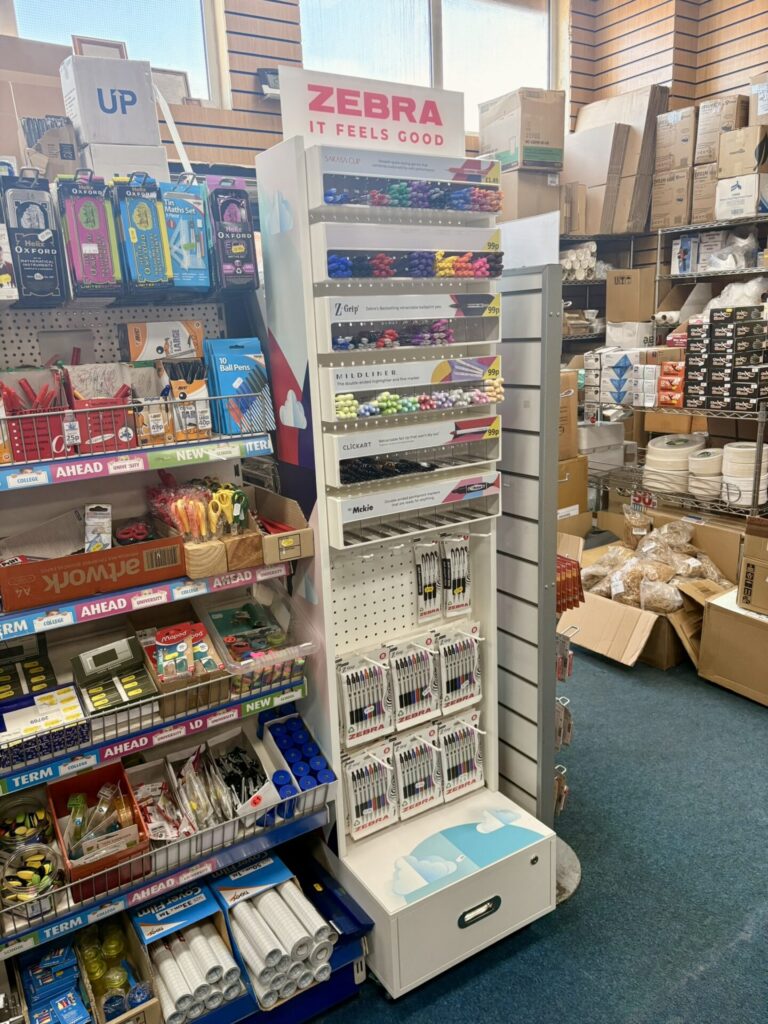
Wood and metal displays built to last
Wooden and metal displays remain popular for their durability and considered, premium appearance. Increasingly, the focus is on creating fixtures that can stay in-store while adapting to changing campaigns and product ranges.
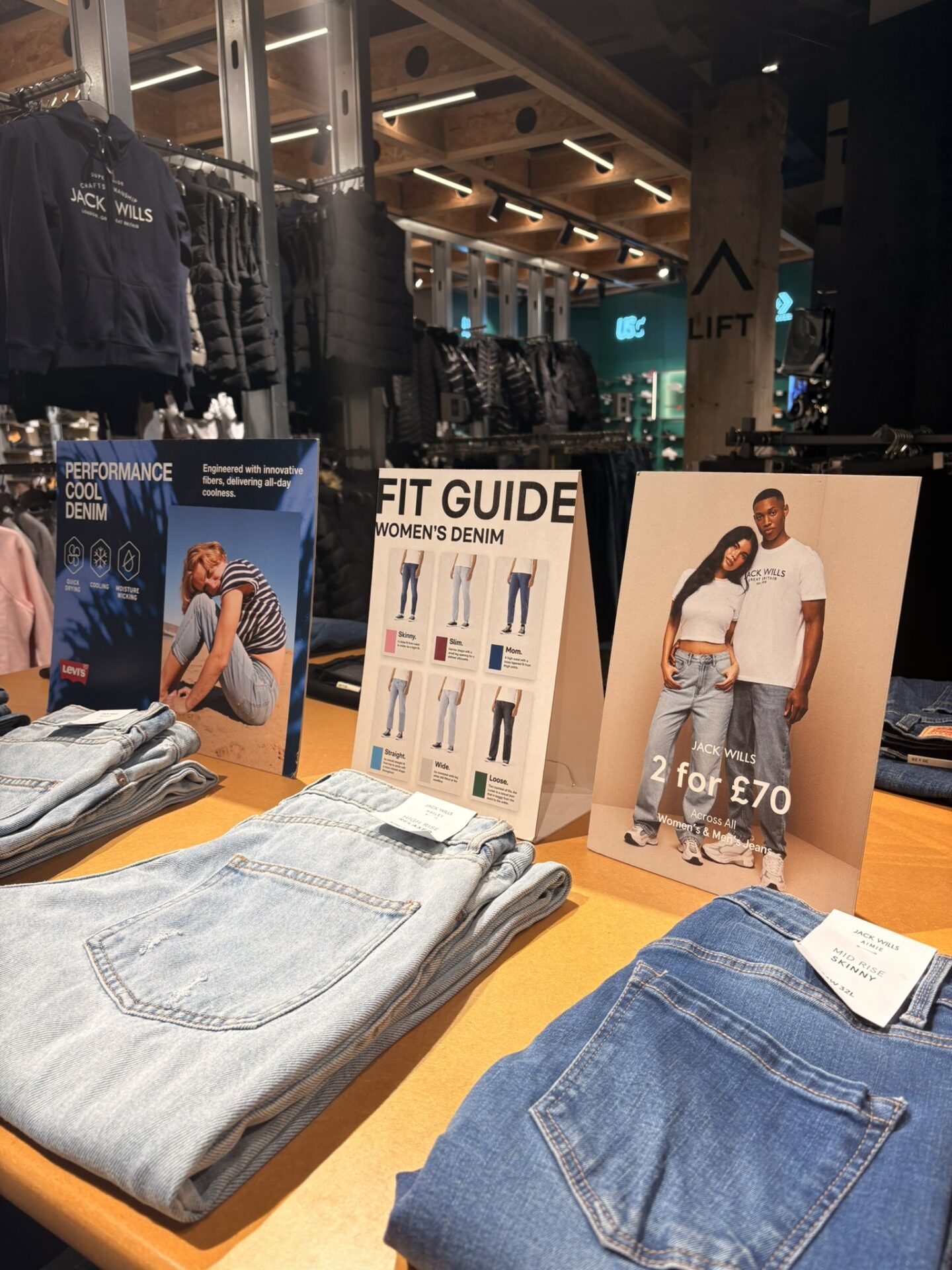
Interchangeable graphics are a simple but effective way to achieve this. Rather than replacing an entire display when branding or messaging changes, retailers can update the graphics while retaining the main structure.
Combining materials can also create distinctive results, from metal frameworks with wooden elements to fixtures incorporating replaceable graphic panels.
Considering how a display will be used over time is an important part of creating a practical, long-lasting solution.
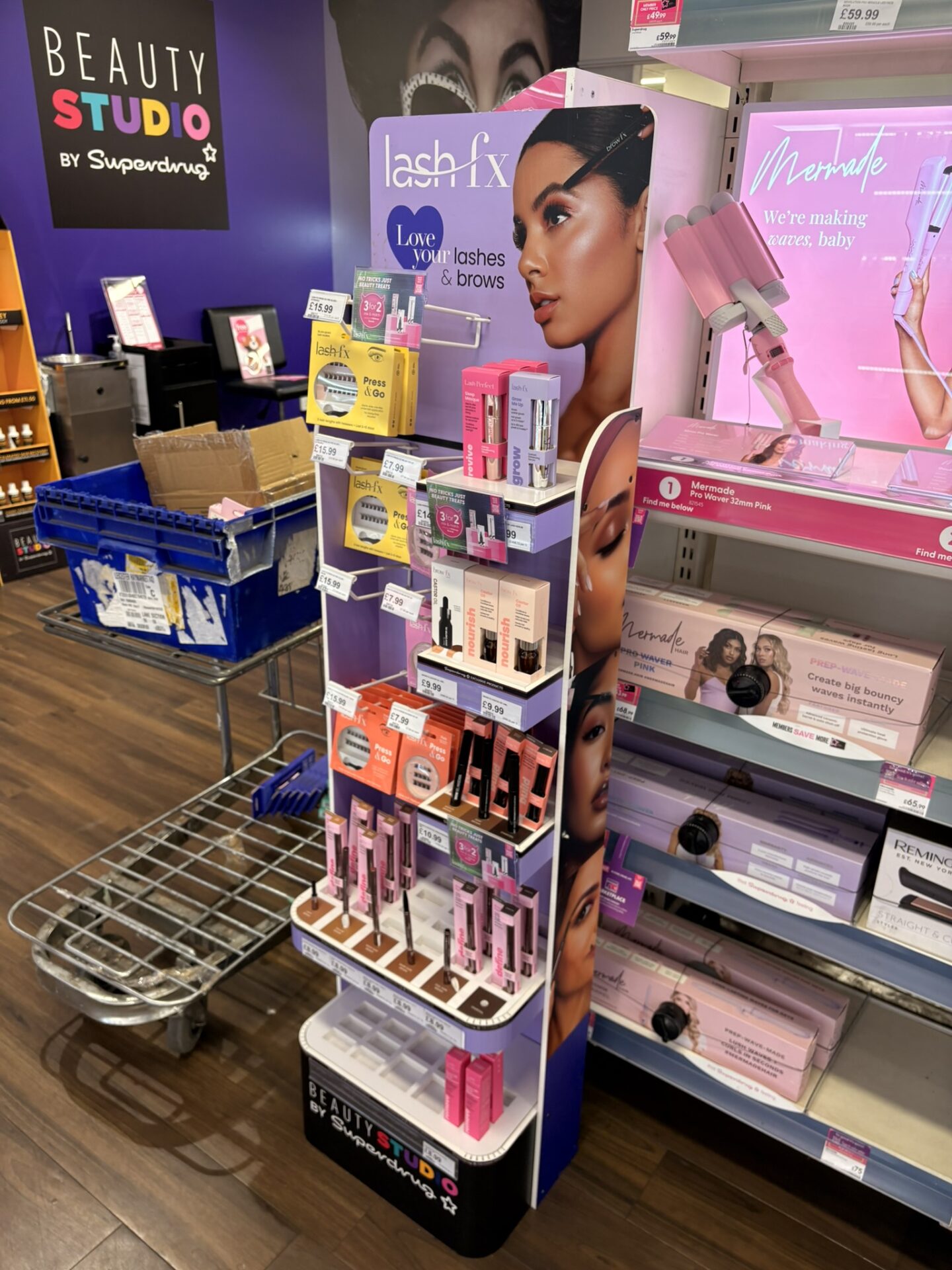
Less POS, but more thought behind it
One noticeable change is the reduction in the amount of POS and freestanding display material in some stores. Rather than filling every available space, retailers appear to be taking a more selective approach.
Every display needs to justify its presence. Does it help shoppers find a product, communicate important information or improve the presentation of a range?
With fewer visual distractions, the positioning and clarity of each display become even more important. POS doesn’t necessarily need to be large or elaborate to make a difference.
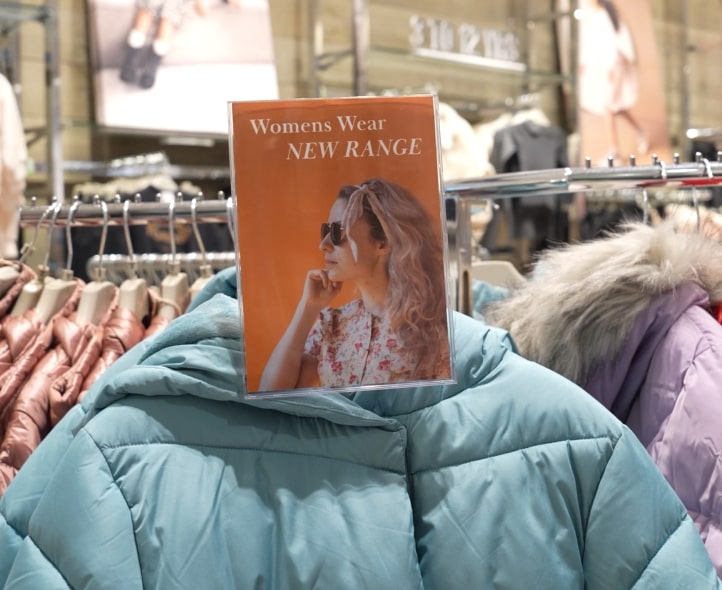
Reflex Sign Holders are a good example. Designed to fit onto clothing rails and other retail fixtures, they make use of otherwise underused space to display prices, promotions and product information. Available in different sizes and with a variety of attachments, they help retailers maintain consistent signage across different fixtures and stores.
Sometimes, a small, well-designed solution can be just as valuable as a much larger display.
Tighter budgets, with room for a little theatre
From a design and manufacturing perspective, budgets feel tighter than ever, and this is becoming increasingly apparent in retail. There’s less appetite for large volumes of new POS, with greater scrutiny over costs and the value each display delivers.
For designers and manufacturers, this means finding creative ways to achieve the right result within challenging budgets. Simplifying construction, making better use of materials and designing for reuse can all help.
However, there’s still a place for displays that deliver the ‘wow’ factor. Flagship stores and carefully chosen showcase locations can justify more ambitious designs, premium materials and distinctive brand experiences.
Rather than rolling out an elaborate display across hundreds of stores, retailers may concentrate their investment in one or two key locations where it can have the greatest impact.
This creates a balance between cost-conscious POS for wider rollouts and more creative, bespoke installations for selected stores. Understanding the brief, budget and intended audience from the outset is essential to getting the most from either approach.


Flexibility is key
Retail is constantly changing. Promotions come and go, product ranges evolve and store layouts need to accommodate new priorities. Displays that can adapt are therefore increasingly valuable.
Interchangeable graphics allow retailers to refresh messaging without replacing the entire fixture. Modular designs and reusable components can offer similar flexibility.
This principle also applies to smaller products such as sign holders. The Reflex range offers different frame sizes and attachments, helping retailers maintain a consistent signage style across different fixtures. The holders can then be reused as promotions change, simply by replacing the graphics.
For retailers managing multiple stores, this can make it easier to maintain consistency while adapting to different signage requirements.
We believe flexibility is best considered at the design stage, ensuring the finished product works for both its immediate purpose and future use.
What does this mean for the future of retail displays?
The direction of travel is towards more considered design. Cardboard is being used in innovative ways, wood and metal are supporting longer-term fixtures, and interchangeable graphics are helping retailers get more from their investments.
With fewer displays in some stores and tighter budgets, every item needs a clear purpose. The aim isn’t necessarily to create the biggest or most elaborate unit, but to find the right solution for the retailer, the brand and the shopper.
At DisplayMode, we design and manufacture a wide range of retail displays and POS products, from bespoke wooden and metal displays to plastic graphic holders and our patented Reflex Sign Holders.
Whether it’s a bespoke project, an improvement to an existing solution or a simple way to make in-store signage more effective, we focus on understanding the brief and finding a practical way forward.
Ultimately, good retail display design is about making every element count, both now and in the future.